









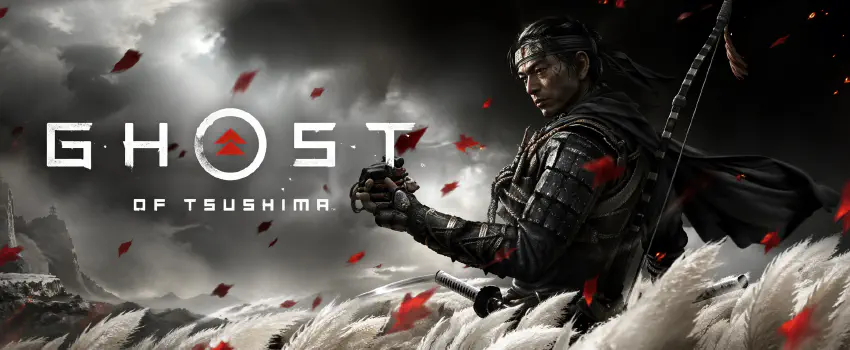
A Samurai Masterpiece (and It is not The 7 Samurai)
Every few years, a title comes along that feels like it was crafted with a singular, unwavering vision. This samurai epic is a stunning love letter to cinema that earns every single frame. It quickly became my favorite of the year, not just for its emotional weight, but for its sheer technical elegance.
The End of Loading
From a gamedev standpoint, the most mind-blowing achievement here is the data streaming. The loading speeds are blazing fast, even on PC. On a modern NVMe drive, fast travel feels almost instantaneous—it’s a masterclass in asset management and decompression. Traditionally, open-world games suffer from “pop-in” or long transition screens to clear the buffer, but Sucker Punch managed to optimize their proprietary engine to a degree that makes the hardware feel invisible. This isn’t just a convenience; it changes how you interact with the island, encouraging frequent exploration without the “loading tax” that usually hampers large-scale RPGs.
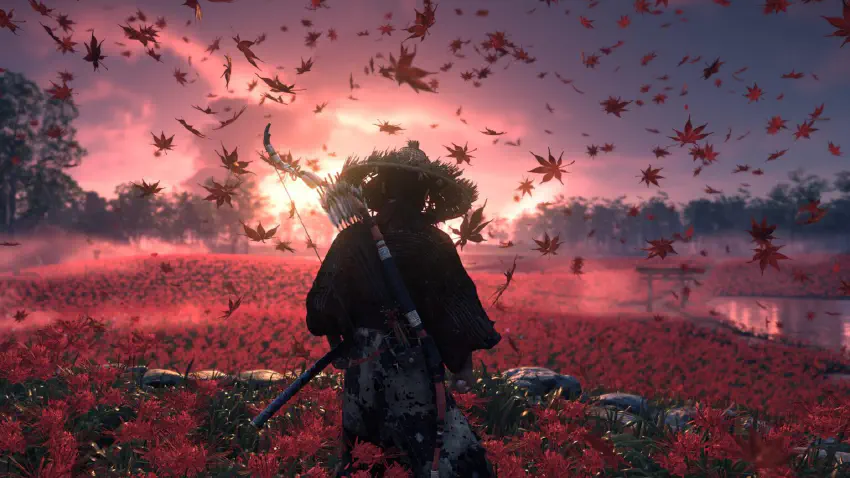
The use of particle effects and wind simulation is another area of technical brilliance. Instead of static environments, the island is in constant motion. Every pampas grass blade, every falling leaf, and every drop of blood follows the physics of the world. The decision to use the “Guiding Wind” as the primary navigation tool is a strokes of UX genius. It removes the need for a cluttered HUD or a distracting mini-map, keeping the player’s eyes firmly on the beautiful art direction.
Cinema Choices
Visually, the project is a triumph of color theory. Each region has a distinct palette—from the fiery reds of a maple forest to the serene purples of a flower-filled field. While I only played around with the photo mode and the “Kurosawa Mode” briefly, I can acknowledge they are superb. The Kurosawa Mode, specifically, isn’t just a black-and-white filter; it adjusts the contrast, film grain, and even the audio quality to mimic the 1950s cinematic aesthetic. It’s a bold artistic choice that demonstrates a deep respect for the source material.
The combat gameplay is a perfect blend of simplicity and depth. It’s addictive, built around stances that must be switched in real-time to counter specific enemy archetypes. The “clash” of steel feels weighty and responsive, providing a visceral satisfaction that many action games struggle to capture.
Honor and Sacrifice
At its heart, the narrative tells a compelling story of Jin Sakai, a man forced to choose between the rigid code of his ancestors and the “dishonorable” tactics needed to repel a Mongol invasion. Unlike many open-world experiences where the plot can feel disjointed, Jin’s journey remains gripping from start to finish. The supporting cast is equally strong, with side quests that feel like meaningful chapters rather than mere filler.
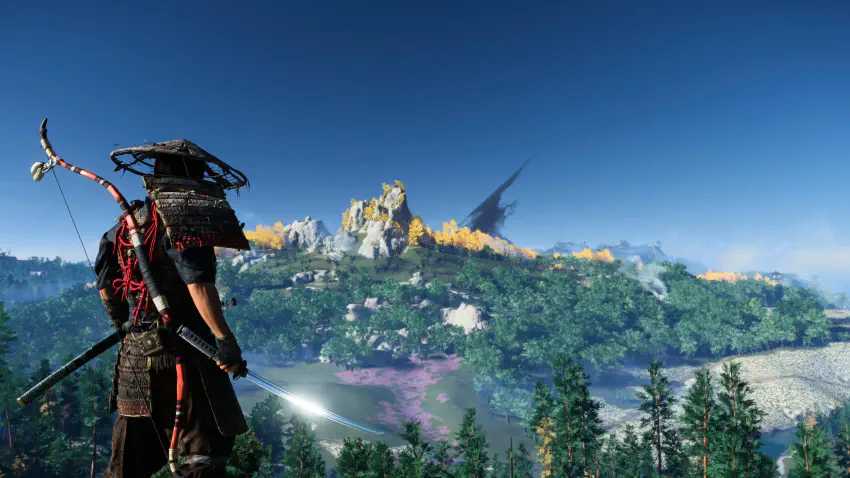
The project is a rare 10/10 for me. It takes the familiar open-world formula and polishes it to a mirror sheen, delivering a mechanical and emotional experience that stays with you long after the credits roll. It’s a testament to what happens when technical optimization and artistic vision are perfectly aligned.
